1b Hair Type: The Complete Guide to Identifying and Styling Medium-Straight Hair
If you have ever brushed your hair and wondered why it falls almost perfectly straight but still holds a soft bend at the ends, you may already belong to the 1b hair type category. This often-overlooked hair type sits comfortably between pin-straight and gently wavy, giving it a reputation as one of the most versatile and low-maintenance textures around. Whether you are trying to confirm your own hair type or looking for styling advice that actually works for medium-straight strands, this guide breaks down everything you need to know.
Understanding your hair type is not just a fun exercise — it directly affects how your hair responds to cuts, color, heat styling, and everyday products. The more precisely you identify your texture, the easier it becomes to choose the right routine, the right salon service, and the right finishing products.
What Exactly Is the 1b Hair Type?
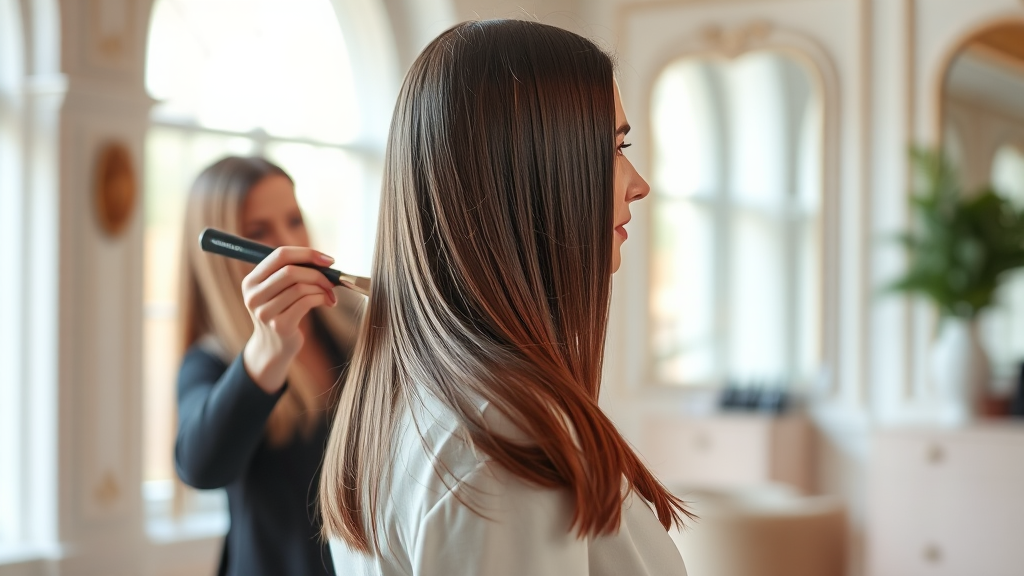
The 1b hair type belongs to the Type 1 family, which covers all straight hair. Within that family, 1a is the finest, flattest, and most glass-like, while 1c is the coarsest and thickest of the straight textures. The 1b hair type falls right in the middle. It is straight for the most part, but it has slightly more body and volume than 1a, and it tends to bend gently near the ends rather than hanging completely flat.
People with 1b hair usually notice that their strands have a natural, subtle curve at the tips even when they do nothing to their hair. The roots tend to lie flat against the scalp, and the mid-lengths stay relatively smooth. It is not wavy in the true sense, but it is also not perfectly poker-straight. That in-between quality is what makes 1b so easy to work with — it holds a curl or a blowout better than 1a, yet it still looks sleek and polished with minimal effort.
Strand thickness for 1b hair is typically medium. The hair feels substantial between your fingers without being coarse, and it usually has a natural shine that reflects light well. Density can vary from person to person, so two people with 1b hair may look quite different depending on how much hair they have on their scalp.
How to Tell If You Have 1b Hair
Identifying your hair type at home is simpler than it sounds. Start by washing your hair and letting it air-dry completely without applying any styling products, brushing, or touching it. Once it is fully dry, look at the shape of a single strand and the overall silhouette.
If your hair dries straight with a slight bend at the ends and very little natural wave through the mid-lengths, you are likely looking at 1b. If it dries completely flat with no bend at all, you may be closer to 1a. If you see a noticeable S-shape or loose waves forming, you may actually be in the Type 2 category.
Another quick test is the ponytail method. Gather your hair into a ponytail and feel the thickness. 1b hair usually forms a ponytail that is medium in circumference — not thin, not overly thick. You can also press a single strand between your fingers; 1b hair tends to be smooth and slightly resistant to bending, which is why it can sometimes feel slippery when you try to pin it up.
If you are still unsure, an online hair type quiz can help you narrow it down. Tools like the one offered by Beauty Lies Truth are designed to walk you through a few simple questions and give you a clearer answer, which is especially useful if you are between two categories.
Why the 1b Hair Type Is So Versatile
One of the biggest advantages of 1b hair is its flexibility. Because it is straight but not completely flat, it can be styled in almost any direction. It takes a blowout beautifully, holds soft waves for hours, and can be straightened into a sleek, glass-like finish when you want something more polished.
This versatility also makes 1b hair a favorite among stylists. It responds well to layering, which adds movement without creating frizz. It handles color treatments reasonably well, especially when the hair is healthy. And because it has a natural shine, it tends to look glossy even on days when you do very little to it.
That said, 1b hair does have a few quirks. Because the roots tend to lie flat, volume can be a challenge, especially on the second or third day after washing. Many people with this hair type find that their hair looks limp at the crown while the ends still look fine. This is a common complaint, and it is easily managed with the right techniques.
Styling Tips for 1b Hair
If you want to make the most of your 1b hair, focus on adding texture and lifting the roots. A volumizing mousse or a lightweight root-lift spray applied to damp hair before blow-drying can make a noticeable difference. Blow-drying with your head upside down or using a round brush to lift the roots will give you more height without making the hair feel heavy.
For everyday wear, a simple blowout with a slight bend at the ends is often all you need. If you prefer a more relaxed look, try a sea salt spray or a texturizing mist on damp hair and let it air-dry. This encourages a subtle, natural bend that suits the 1b texture perfectly.
When it comes to heat styling, always use a heat protectant. Even though 1b hair is relatively resilient, repeated exposure to high heat can cause dryness and split ends over time. A good rule of thumb is to keep your flat iron or curling wand at a moderate temperature and to avoid passing over the same section more than once or twice.
For special occasions, 1b hair takes curls beautifully. Because the hair is straight but has a bit of grip, curls tend to hold longer than they would on 1a hair. Use a medium-barrel curling iron and set each curl with a light-hold hairspray, then brush through gently for soft, romantic waves.
Care and Maintenance for 1b Hair
Caring for 1b hair is generally straightforward, but a few habits can keep it looking its best. Wash your hair two to three times a week with a gentle shampoo, and follow with a lightweight conditioner focused on the mid-lengths and ends. Avoid heavy, rich conditioners near the roots, as they can weigh the hair down and make it look greasy faster.
Because 1b hair can become oily at the roots relatively quickly, dry shampoo is a useful tool. Spray it at the roots, let it sit for a minute, then massage it in and brush through. This absorbs excess oil and adds a bit of texture, which helps with volume.
Regular trims are important to keep the ends looking clean and to prevent split ends from traveling up the strand. Every eight to twelve weeks is usually enough, depending on how fast your hair grows and how much heat styling you do.
If you color your hair, consider sticking to shades that work with your natural undertones. A color analysis quiz can help you determine whether you look best in warm, cool, or neutral tones. This is especially useful if you are thinking about a big change and want to make sure the new color flatters your skin tone.
Common Challenges and How to Solve Them
Even the most manageable hair types come with a few frustrations. For 1b hair, the most common issues are flat roots, limp second-day hair, and a lack of volume. The good news is that all of these can be addressed with simple adjustments.
For flat roots, try applying a volumizing product only at the base of the hair and blow-drying with a round brush. Avoid applying conditioner or heavy oils near the scalp. If your hair tends to get oily quickly, consider a clarifying shampoo once a week to remove buildup.
For limp second-day hair, dry shampoo is your best friend. You can also try flipping your part to the opposite side, which instantly lifts the roots and gives the hair a fresh look. A quick blast of warm air from a blow-dryer at the roots can also revive volume without a full wash.
If your hair feels dull, a weekly hair mask or a gloss treatment can restore shine. 1b hair reflects light well when it is healthy, so keeping it moisturized and free of product buildup will help it look its best.
1b Hair and Salon Services
When you visit a salon, knowing your hair type helps your stylist recommend the right cut and treatment. For 1b hair, layers are usually a good choice because they add movement and prevent the hair from looking too heavy at the bottom. A blunt cut can also work well if you want a sleek, polished look, but it may emphasize flatness at the roots if the hair is very fine.
Color services are generally safe for 1b hair, but it is always a good idea to discuss the health of your hair with your stylist first. If your hair is already dry or damaged, a gentler approach such as a gloss or a demi-permanent color may be better than a full bleach-out.
Treatments like keratin smoothing or bond-building therapies can be beneficial for 1b hair, especially if you heat-style often. These services can reduce frizz, add shine, and make the hair easier to manage. Just be sure to ask about aftercare, since some treatments require specific shampoos to maintain the results.
Frequently Asked Questions About 1b Hair Type
Is 1b hair straight or wavy?
1b hair is considered straight, but it has a slight bend at the ends and slightly more body than 1a hair. It is not wavy in the traditional sense, but it is not perfectly flat either. Think of it as medium-straight with a soft, natural curve.
Can 1b hair hold curls?
Yes, 1b hair holds curls better than 1a hair because it has a bit more texture and grip. Curls may still loosen throughout the day, but with a good styling product and a light hold hairspray, they can last for hours.
How often should I wash 1b hair?
Most people with 1b hair wash every two to three days. If your scalp gets oily quickly, you may need to wash more often, while those with drier scalps can stretch it a bit longer. Dry shampoo can help extend time between washes.
What is the best haircut for 1b hair?
Layers are generally flattering because they add movement and prevent the hair from looking flat. A blunt cut can also work if you want a sleek look, but it may not add much volume. Your stylist can recommend the best option based on your face shape and hair density.
Does 1b hair need special products?
Not necessarily, but lightweight volumizing products, a good dry shampoo, and a heat protectant are helpful. Avoid heavy creams and oils near the roots, as they can weigh the hair down and make it look greasy.
Understanding your hair type is the first step toward a routine that actually works. If you are still unsure whether you have 1b hair, take a few minutes to let your hair air-dry and observe its natural shape. You can also explore more hair and beauty resources at 1b hair type to get personalized guidance. With the right care, 1b hair can be one of the easiest and most elegant textures to style.